The terms “ceramics” and “pottery” get used interchangeably, but they don’t mean the same thing. Knowing the difference helps you choose materials, understand processes, and read product descriptions more accurately.
In the simplest ceramics vs pottery comparison: pottery is a type of ceramic focused on vessels and functional forms made from clay, while ceramics is the broader category that includes pottery plus many other fired, non-metallic materials such as porcelain, tiles, bricks, and advanced technical ceramics.
What Each Term Means (and Why the Confusion)
Ceramics are inorganic, non-metallic materials shaped and then hardened by heat, typically through firing. This umbrella includes traditional clay bodies as well as engineered materials used in electronics, medical implants, and aerospace components.
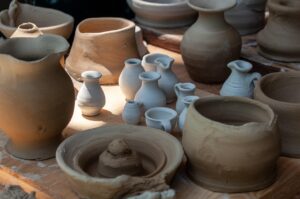
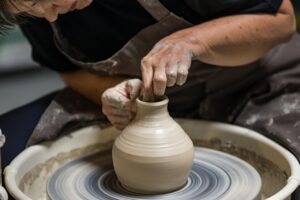
Pottery refers specifically to objects made from clay that are shaped (often on a wheel or by hand) and fired, usually as functional or decorative ware: mugs, bowls, vases, planters, and similar forms. In other words, all pottery is ceramic, but not all ceramics are pottery.
The confusion happens because everyday shopping categories blur terms: a “ceramic mug” is often just stoneware pottery, and “ceramic art” may describe anything clay-based even when it’s clearly pottery.
Materials and Types: From Earthenware to Porcelain
Most pottery is made from three common clay-body families: earthenware, stoneware, and porcelain. Earthenware typically fires at lower temperatures (often roughly 1,000–1,150°C), remains more porous, and is frequently glazed to hold liquids. Stoneware usually fires higher (often around 1,200–1,300°C), becomes more vitrified, and tends to be denser and more durable for daily use.
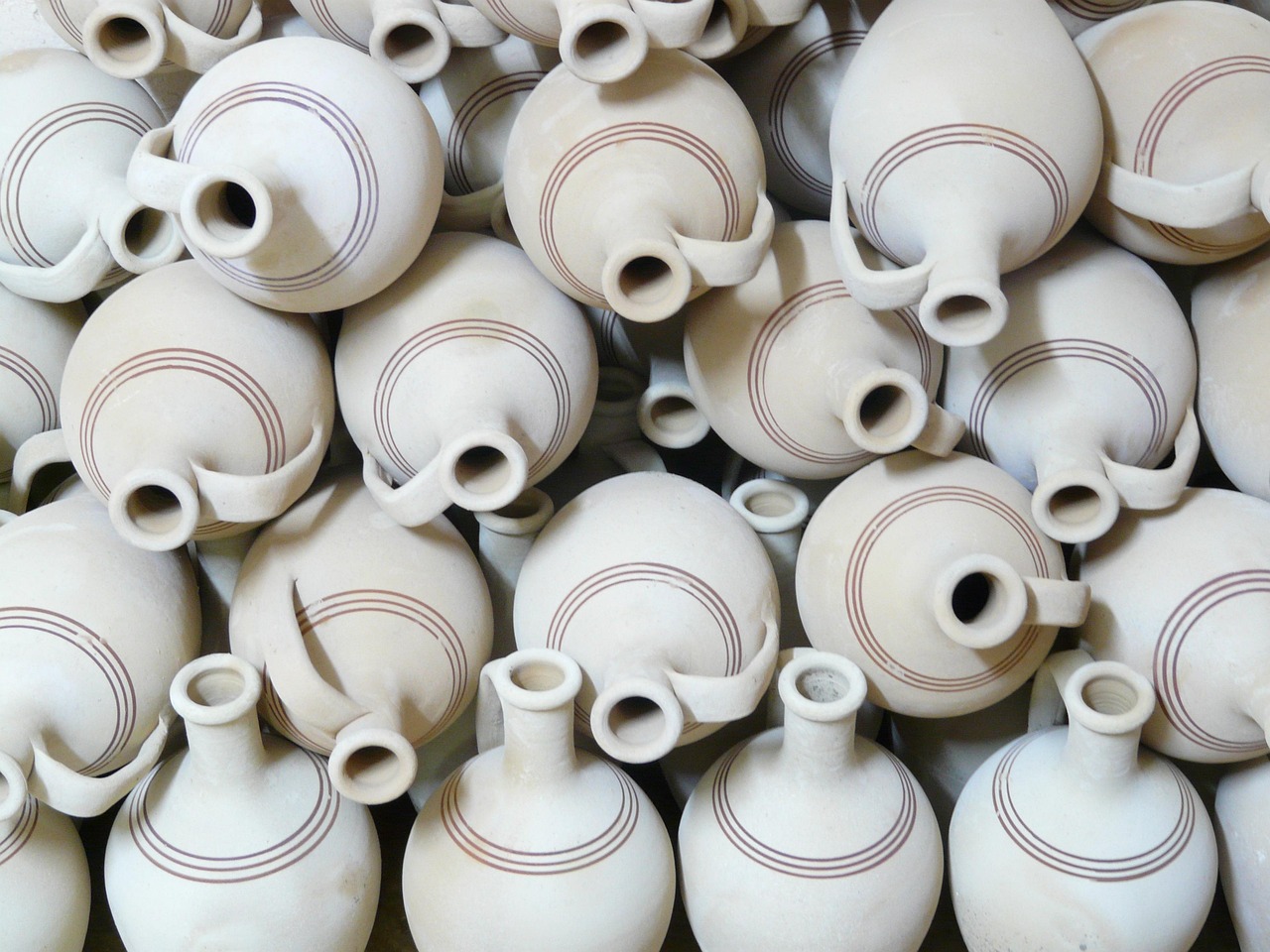
Porcelain sits at the intersection of “pottery forms” and “ceramics as a material category.” It uses refined clays (commonly kaolin-based) and is fired at high temperatures (often around 1,250–1,400°C), producing a white, tight, sometimes translucent body. A porcelain teacup is still pottery in form, but people often call it “ceramic” because porcelain is widely associated with high-end ceramic goods.
Ceramics beyond pottery include structural ceramics (bricks, roof tiles), refractory ceramics (kiln furniture, firebricks), and technical ceramics (alumina, zirconia, silicon carbide). These may involve powders rather than plastic clay, and they often target specific performance traits like heat resistance, electrical insulation, or extreme hardness.
Process Differences: Craft Ware vs Industrial Ceramics
Pottery production usually centers on forming methods suited to plastic clay: wheel throwing, handbuilding (pinching, coiling, slab work), and slip casting for repeatable shapes. After drying, work typically goes through bisque firing, then glazing and a second firing. Many studios rely on kilns that fire in oxidation (electric) or reduction (gas), with results that influence color and surface character.
Ceramics as a broader field includes these same kiln steps but also industrial processes like powder pressing, extrusion, tape casting, and sintering. In advanced ceramics, the “green” (unfired) part may be machined before firing, and the final product may require tight tolerances measured in fractions of a millimeter. This is a major practical difference in ceramics vs pottery: pottery often prioritizes form, feel, and glaze surface, while technical ceramics prioritize repeatable performance.
Glazes highlight another contrast. Studio pottery glazes are often chosen for aesthetics and food-safety performance, while industrial ceramic coatings and glazes may be engineered for chemical resistance, dielectric properties, or wear resistance. Both involve silica-based glass formation in firing, but the goals and quality controls can be very different.
How to Tell What You’re Looking At (and What to Ask)
If you’re trying to classify an object, start with function and shaping. A bowl, plate, cup, or vase made from a clay body is almost certainly pottery, even if marketed as “ceramic.” A floor tile might be ceramic but not pottery; it’s a ceramic product, typically industrially made, and designed for abrasion resistance and low water absorption.
Next, look for clues of vitrification and finish. Earthenware often feels slightly softer and may show a more open, porous body where unglazed. Stoneware and porcelain tend to feel denser; porcelain is usually whiter and can be thinner while remaining strong. These are not absolute rules, but they help when labels are vague.
Finally, consider intended use. For food and drink, the important questions are whether the ware is properly glazed, whether it’s food-safe, and whether it can handle thermal shock. High-fired stoneware and porcelain generally perform well, but even they can crack if moved from freezer to a hot oven. The most useful takeaway from ceramics vs pottery isn’t just vocabulary—it’s knowing which material and firing level fit your needs.
Conclusion
Ceramics is the broad family of fired, non-metallic materials; pottery is the clay-based subset focused on vessels and related forms. When you compare ceramics vs pottery, think “category vs craft subset,” then use clay type, firing temperature, and intended use to understand what you’re buying or making.